Blog · October 2, 2026
From QR Scan to Paid Deposit: Tracking Kayak Tour Bookings
A coastal kayak outfitter could see people scanning its rack cards, but did those visits become bookings? Here is how Tideglass Kayak Tours connected a short link, branded QR code, and conversion tracking to find out.
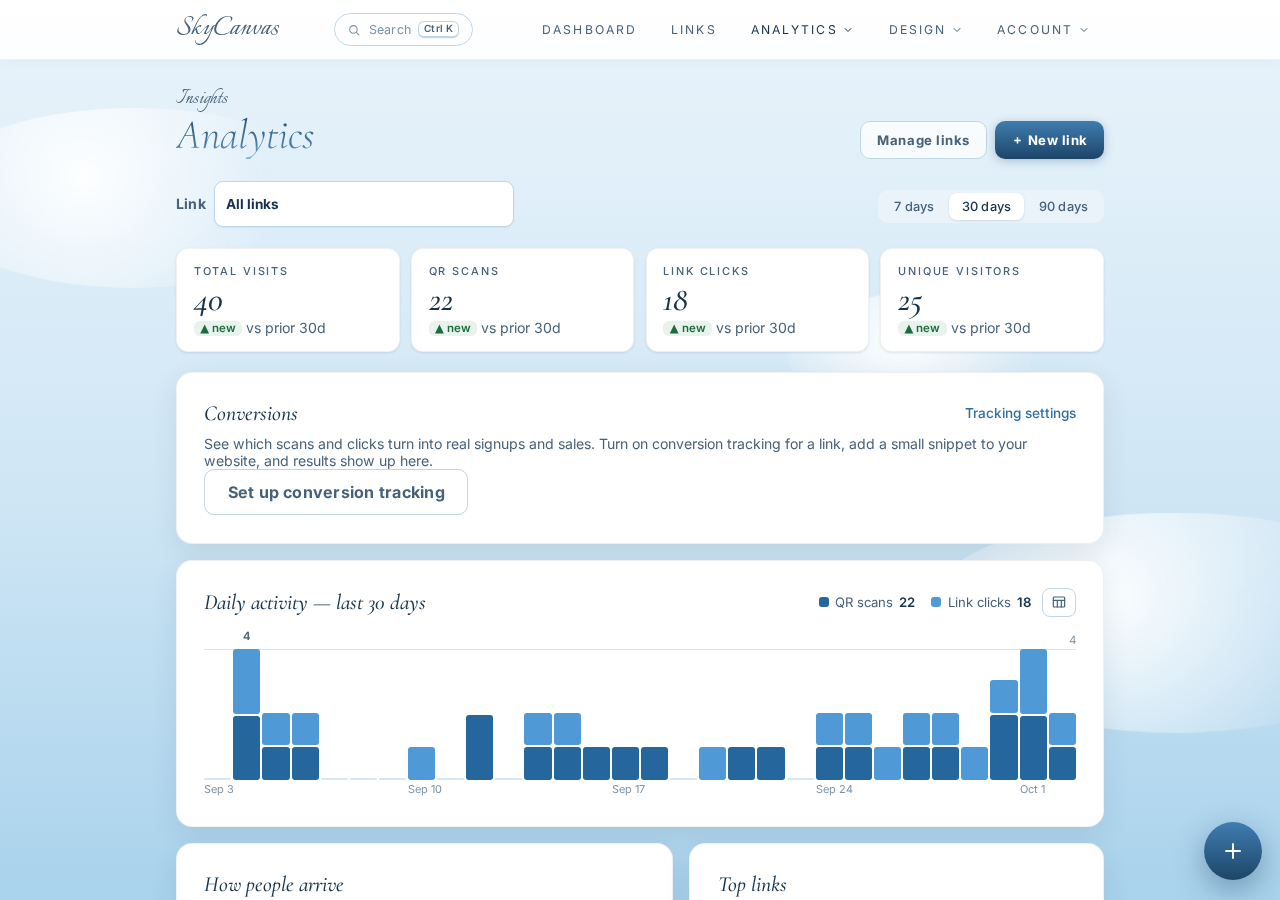
Mara Bennett kept seeing the same encouraging moment around Belfast, Maine. A traveler would pick up a Tideglass Kayak Tours rack card, study the photos of sheltered coves, and scan the QR code. Sometimes that person booked a sunset paddle. Sometimes the trail simply disappeared.
For a two-guide outfitter, that missing detail mattered. Mara needed to know whether printed cards were producing paid deposits, not merely attracting curious visitors. She wanted a simple path from the first scan to the booking page, with enough tracking to show what happened next.
SkyCanvas gave Tideglass one short link, a branded QR code, and a conversion-tracking snippet. Here is the exact workflow.
1. Build a business profile that keeps the setup consistent
Mara started with the SkyCanvas profile page. Under Account, she opened the business profile and entered the details that should guide the rest of the account:
- Display name: Mara Bennett
- Location: Belfast, Maine, USA
- Company name: Tideglass Kayak Tours
- Tagline: Quiet-water adventures along the Maine coast
- Industry: Outdoor Recreation and Guided Tours
- Website: tideglass-kayaks.example.com
She also listed the company’s services, including guided sea kayak tours, sunset paddles, beginner lessons, and private group outings. The audience field described the people Tideglass actually serves: Maine visitors, couples, families, and first-time paddlers.
That information gives the account a clear business identity. It also keeps the company description and audience close at hand when Mara creates marketing assets later.
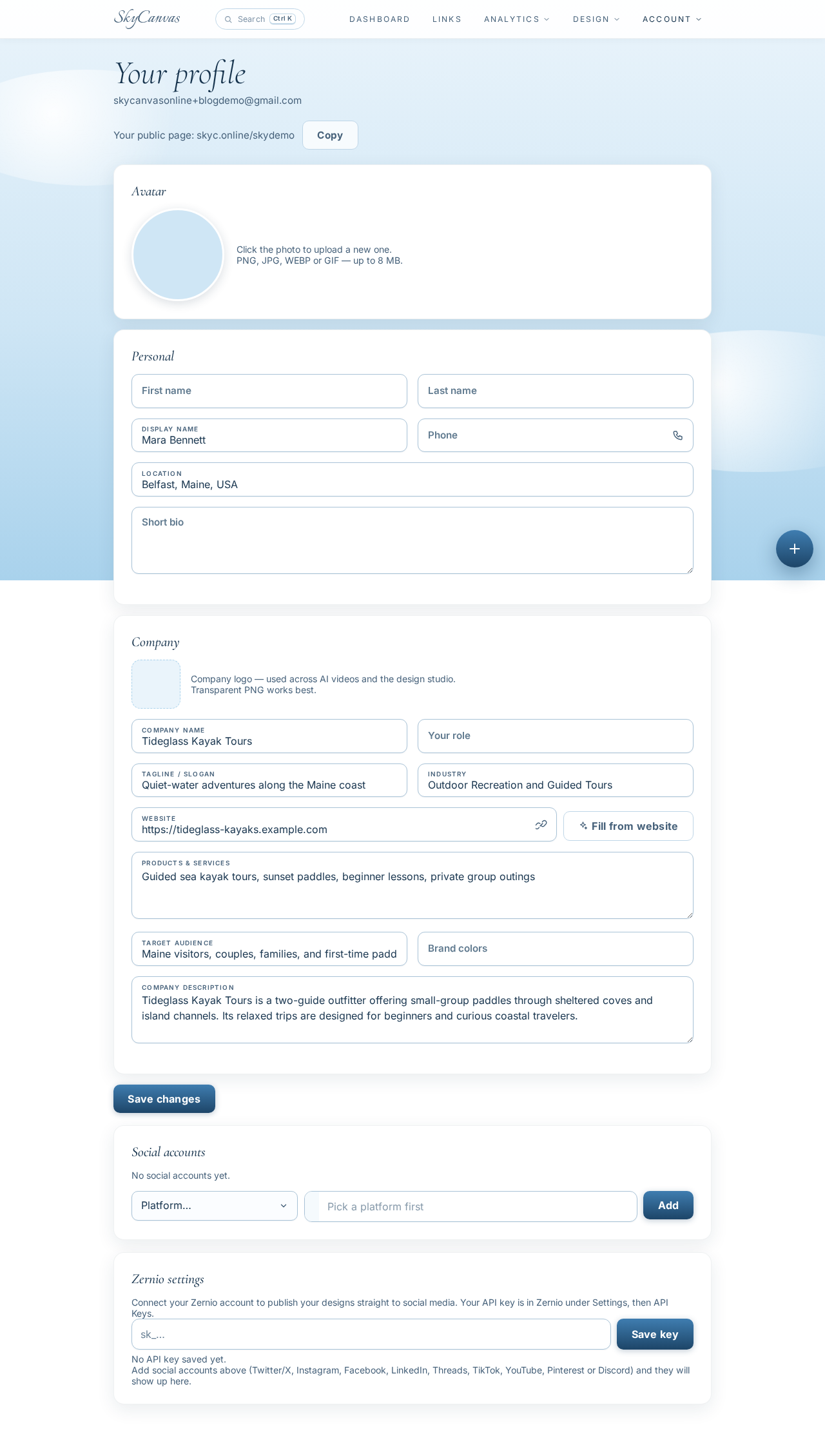
The completed profile shows how much useful context fits on one page. Mara can review the public page address, company information, website, services, audience, and description before saving changes.
2. Create a short link for the booking page
Next, Mara opened Links and chose to create a new short link. The destination was the page where guests could view tour availability and place a deposit:
https://tideglass-kayaks.example.com/tours/book
She gave the link the title Book a Coastal Kayak Tour and added a plain description: “View available guided paddles and reserve a tour with Tideglass Kayak Tours.”
For the custom slug, she entered tideglass-tours. This produced the memorable short address skyc.online/tideglass-tours, which is far easier to read on a rack card than a long booking URL.
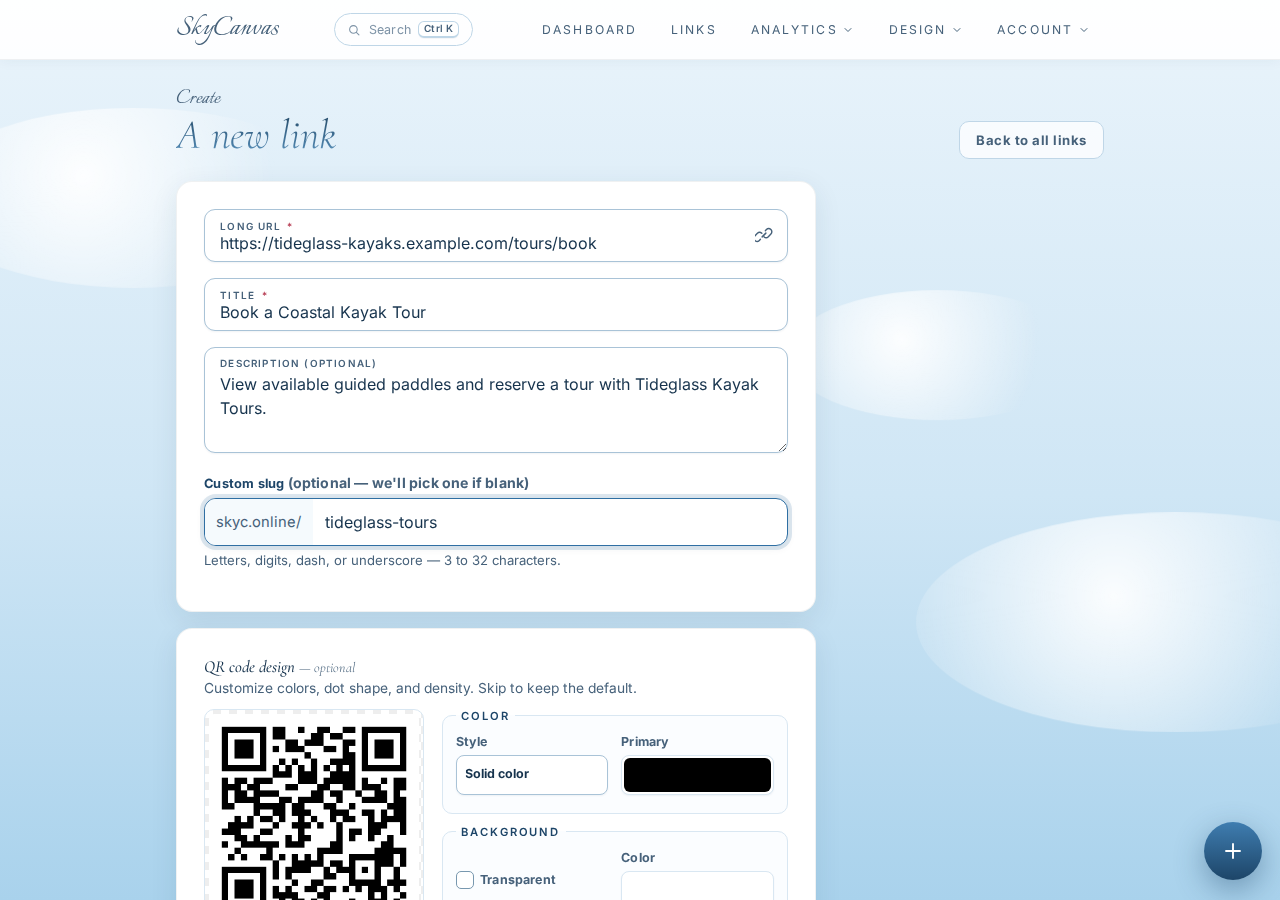
The live QR preview on the right confirms that the code is being created for the same destination. Before saving, Mara can check the title, description, and slug together instead of discovering a typo after printing.
3. Confirm the link and download its QR code
After creating the link, SkyCanvas opened its detail page. This is the checkpoint Mara needed before updating any printed material.
The page shows the short URL, the original destination, and the generated QR code in one place. Mara confirmed that skyc.online/tideglass-tours pointed to the Tideglass booking page and that the wording clearly described the action visitors should take.
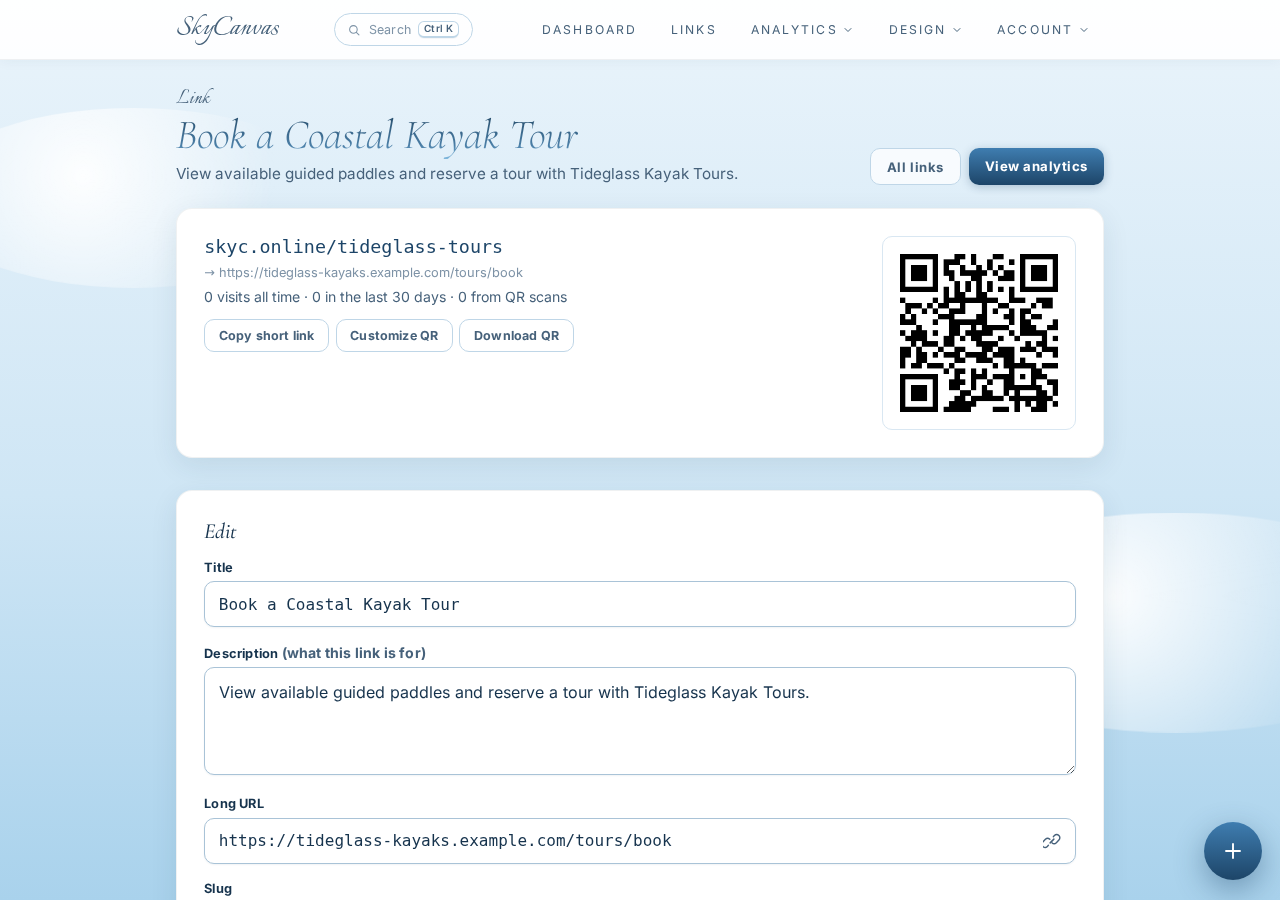
This page also gives Mara a downloadable QR image for rack cards, counter signs, and other printed pieces. Because the short link controls the route, the printed code and the typed address lead into the same measurable visit path.
4. Match the QR code to the Tideglass brand
A working QR code was essential, but Tideglass also wanted it to feel like part of the business. On the link page, Mara opened the QR customization controls and applied the brand colors selected for the outfitter.
She used deep coastal blue green for the main modules, warm coral as the second color, and white for the background. The live preview made it possible to inspect the result while adjusting the style.
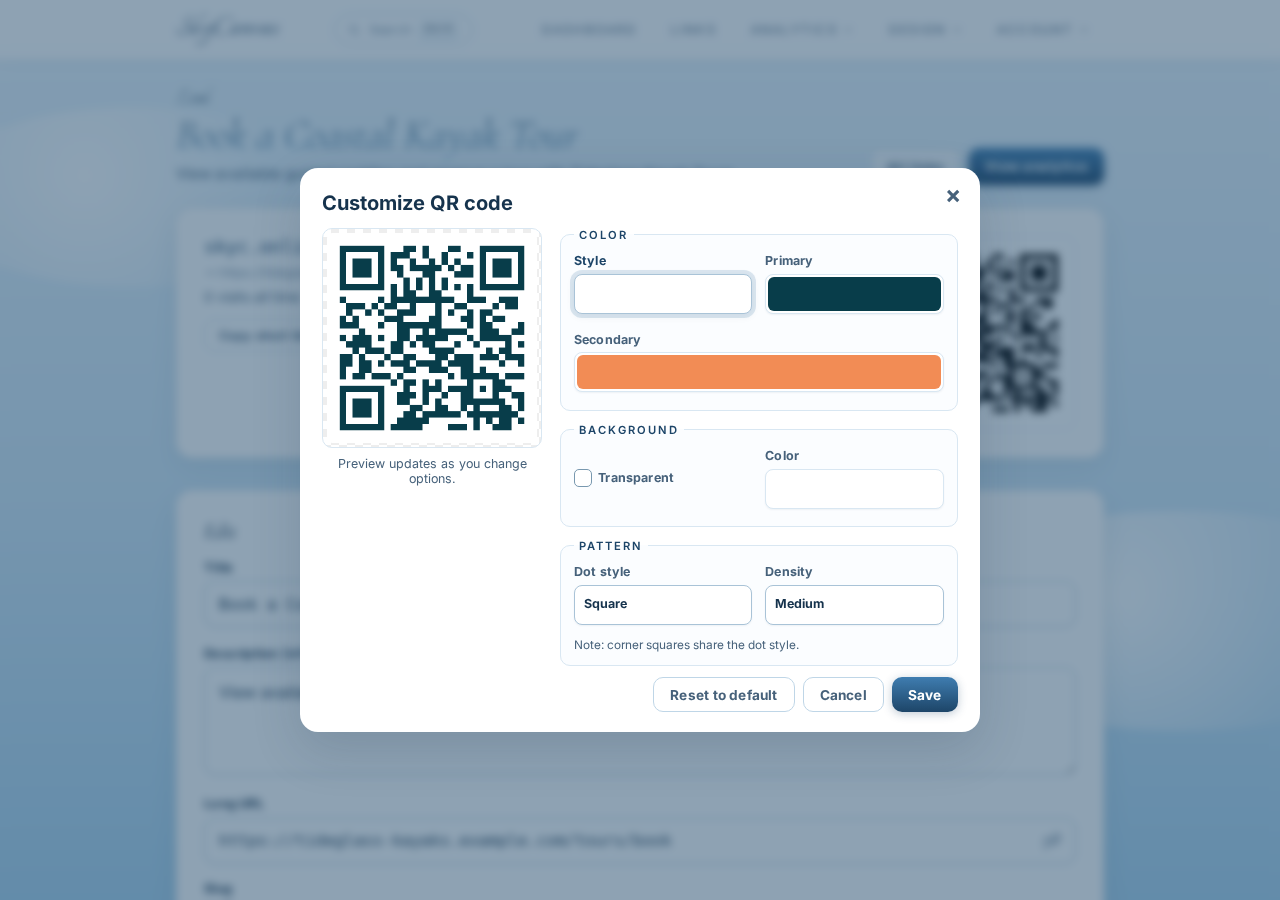
The result connects visually with sea water, painted kayaks, and the warm light of an evening paddle. More importantly, Mara could see the finished code before downloading it for print. She kept strong contrast around the modules so the design remained clear and scannable.
5. Add conversion tracking to the booking site
Clicks and scans answer one question: did somebody visit? Mara needed the next answer too: did that visit lead to a signup or sale?
She opened the SkyCanvas conversion-tracking page and copied the provided one-line t.js snippet. That snippet belongs on the Tideglass website, where it can attribute a completed signup or sale to the short link or QR code that brought the visitor.
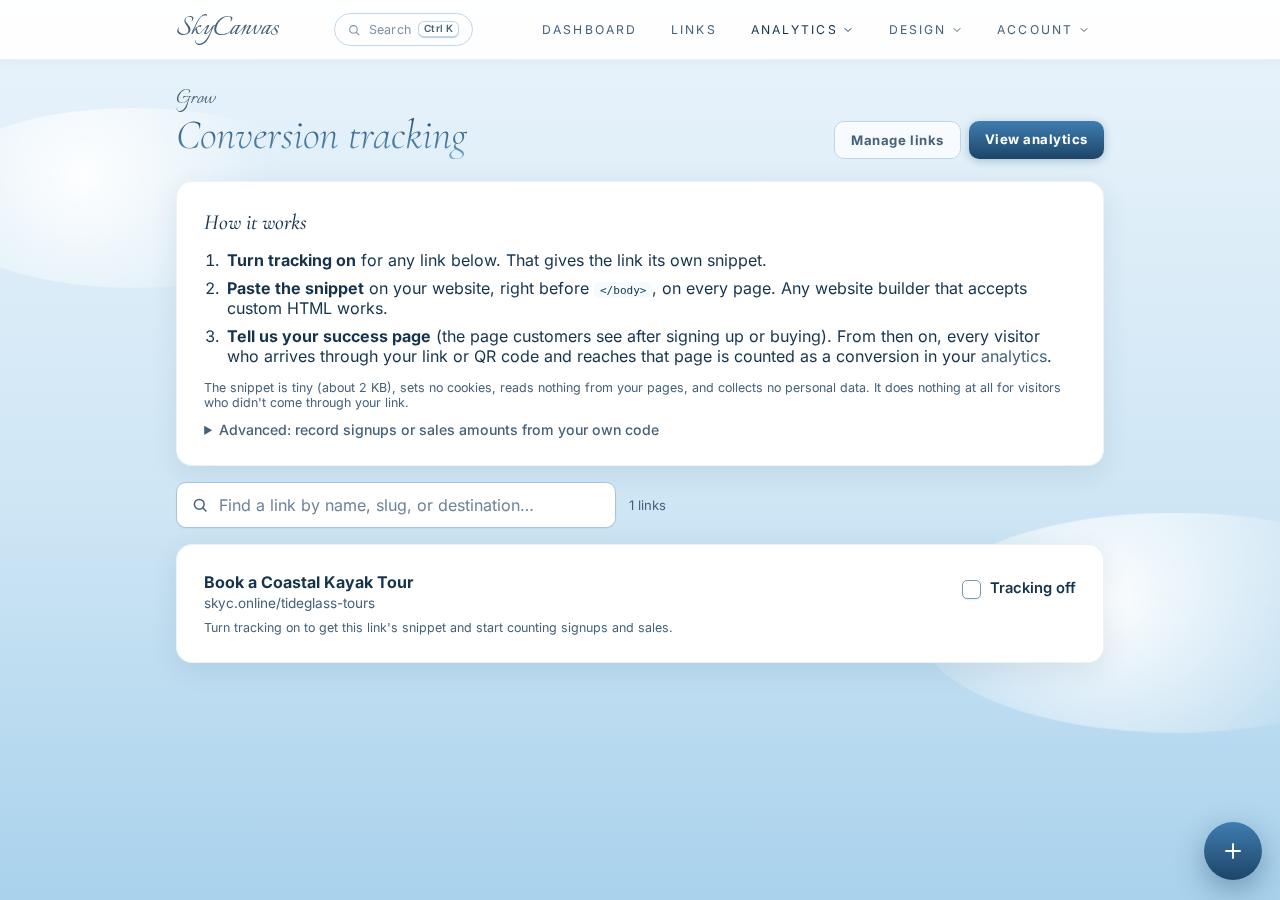
For a real business site, the person who manages the website would paste the snippet into the site code. Once it is present, SkyCanvas can connect activity across the journey: someone follows the Tideglass link, reaches the booking page, and completes the tracked conversion.
This is the step that turns the rack card from a general awareness piece into a measurable booking route.
6. Read the results in analytics
With the short link circulating and tracking active, Mara could open analytics to review performance over time. The page brings together per-link clicks, QR scans, device information, and conversions.
Each metric answers a practical question. Clicks show overall visits through the short address. QR scans reveal engagement with physical materials. Device details help Mara understand how guests browse. Conversions show whether those visits reached the meaningful outcome.
For Tideglass, that outcome was a paid tour deposit. Mara could finally discuss the rack cards in business terms. Instead of saying that people seemed interested, she could see whether scans became bookings and judge where printed cards deserved another run.
The workflow also gave her one clean address to share anywhere: skyc.online/tideglass-tours. Guests could scan it from a card or type it from a counter sign, while Mara reviewed the resulting activity in one account.
Tideglass did not need a complicated reporting project. It needed a clear path between interest and action. A short link made the booking page easy to reach, the branded QR fit the outfitter’s identity, and conversion tracking closed the gap between a scan and a deposit.
Ready to make your own marketing easier to measure? Create a free SkyCanvas account and build your first short link and QR code.
Tideglass Kayak Tours is a fictional business we created to show a real SkyCanvas workflow. Every screenshot is real, captured live while writing this guide.